

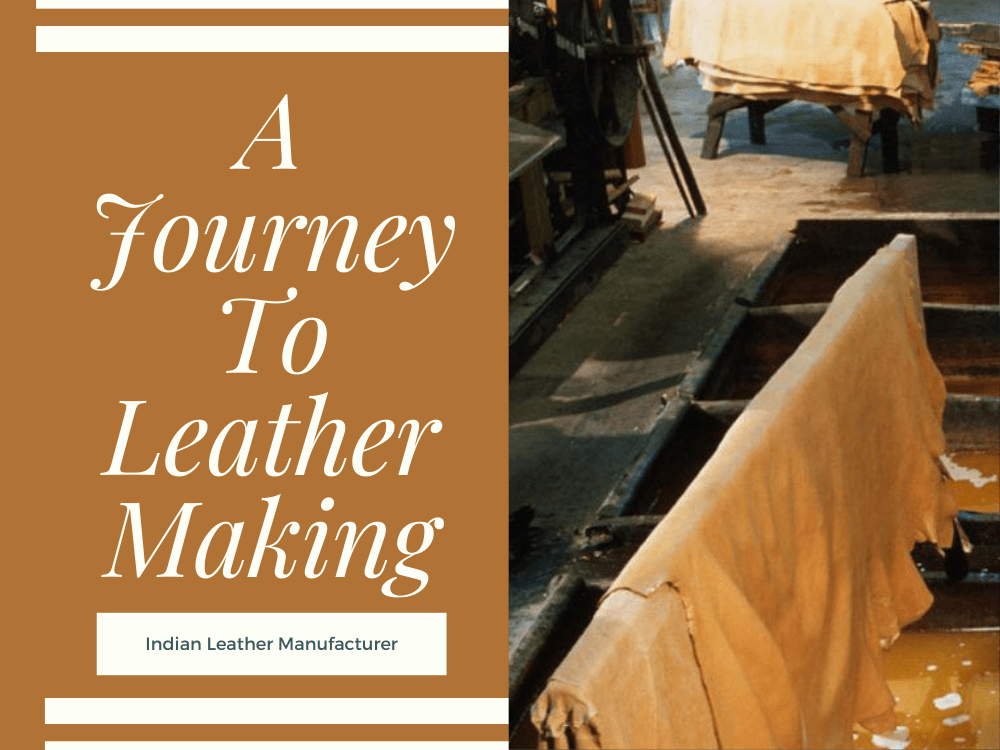
Leather is a material created through the process of tanning of hides and skins of animals. The procedure assisted in converting putrefiable skin into durable long-lasting and flexible natural material.
History Of Leather Manufacturing
Leather making is among the most primitive kinds of action men have involved in centuries past. Leather is connected with creatures, and they had been hunted and killed for food, but prior to swallowing, their skin has been removed using sharp flints. This skin was then utilized to wrap around and protect from cold weather. However, the skin shortly started putrefying and decomposing. So, ancient guys began massaging the leather, a first step towards maintaining leather. However, this resulted in leather turning stiff and hard losing its sheen and comfort.
Leather was subsequently softened by massaging fat on the skin. This made the skin survive longer and made it more pliable and at precisely the exact same time prevented it from becoming wet. Afterward using water, barks, leaves, and berries, a liquid with vegetable extracts have been used for making leather supple soft and rust-resistant. The active agents in this extract are known as tannins and were probably the first system of tanning leather.
When leather production became more organized and orderly, tanneries were put up at particular pockets with the close supply of raw materials like a decent supply of hides and skins, plenty of water — lime for softening and hair removing, and ample plant extracts for tannins. Even the procedures we use today are based on the ancestral methodology used thousands of years back.
Leather Manufacturing Process
The leather production process involves many stages. All genuine leathers undergo these processes going into the tannery. But the true manufacturing stage starts from the tanning process. When the skins come in the tannery they’re in their treated form. They are then analyzed, to check for any noticeable damages because of poor whipping or curing. Then the following steps are done before beginning the tanning procedure.
Soaking
The skin is soaked in order to reunite the skin back to its original condition and to remove the blood, dirt, and other impurities. This process as other procedures involves chemicals and is carried out in large wooden drums.
The skin is first soaked in cold water containing detergent, salt, and biocide. The water is infrequently changed unless it’s heavily contaminated. The process is completed when the water stays clean, and the skins are re-hydrated. The time taken for this method is dependent upon the way of curing implemented in the abattoir. For instance, it takes longer for dry-cured skins (approximately 72 hours) and shorter for wet-salted skins (approximately 18 hours). The whole process can be expedited by using hot water and enzymes. But soaking ought to be carried out correctly; therefore the leather may unwind correctly allowing the chemicals to permeate in different procedures else it may give a patchy and inconsistent leather appearance.
Liming
The next phase in leather processing is liming. In this phase, hair is removed from the cleaned skin. The hair has to be removed from the roots and the skin in order to expose the grain layer. With this particular sodium sulfide or sodium, hydrosulphide is added to the soaked skins leaving it for one hour. Nearly after an hour, these compounds penetrate deeply into the hair and the grains of the leather, causing the breakdown of the keratin, the main protein constituent of the hair and skin. Lime and caustic soda are all strong alkalis that improve the additional breakdown of hair and skin away. Other than this, the liming process removes the inter fibrillary proteins. These are proteins like an egg white that, if not eliminated, would harden like paste and create the leather stiff.
Lime also produces two major physical effects — osmotic swelling and lyotropic plumping. For this reason, the skin becomes swollen and engorged with water causing the fiber packs to start up allowing the thorough penetration of the flea materials at a later stage.
Washing
The procedure for liming is followed by the washing machine, where the skins are washed to remove excess lime, other chemicals, and substances loosened during the preceding stage.
Fleshing
This process is followed so as to eliminate any sticking fat and cells on the bottom of the skin that may be a significant barrier to the penetration of the following chemicals. So these should be eliminated, helping the skin to unwind also helps in eliminating the remaining hair roots from the skin. This process is carried out with a fleshing machine.
Thus, removal of the flesh in an early stage is highly desired. The fleshing performance not only removes flesh but aids in soothing the skins and in addition, it aids in the elimination of any residual hair follicles from the skin. This process is carried out with a fleshing machine.
De-Liming
Considering that the liming process makes the skins more alkaline, it’s required to reduce the degree of alkalinity prior to the tanning operation. Ammonium chloride can be used to neutralize the skin and make the skin normal. Consequently, skin de-swells and the keratin proteins ruined during liming process washout from the epidermis.
Bating
Bating makes the skin soft and supple as it eliminates the muscle fibers with enzymes. Following this treatment, the completed grain will be super relaxed and smooth. Originally, animal dung — dogs and poultry were used as the source of enzymes, followed by enzymes extracted from cows pancreas, but now it’s replaced with bacterial enzymes.
Scudding
This is the last process before the tanning. In this procedure, the skins are placed on a curved plank, and around blunt knife is permitted to run across the grain, thereby squeezing some residual hair-root, skin pigmentation, or surface fats from the skin.
We give special thanks to Indian Leather Manufacturer & Indian Leather Tannery for explain us the leather making or processing.