

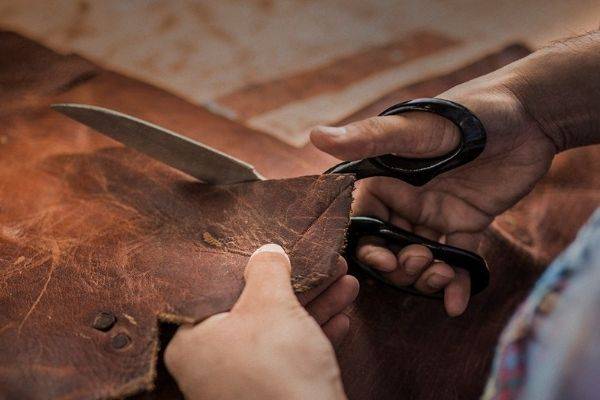
The Basic Process of Making Leather
- The general process of making leather involves these basic steps:
- Removing the skin from the animal
- Removing the flesh from the skin
- Soaking the skin to loosen the hair
- Scraping or abrading to remove the hair
- Removing some of the layers of the skin (for some methods only)
- Coating the collagen (protein) fibers in the skin with a tanning agent
- Softening
There are a lot of different methods for making leather, as developed all over the world. Nowadays, most commercial leather is made using chemical tanning agents, but initially, the process was natural. Classic tanning can be broken down into two categories, and these methods result in very different sorts of leather.
Tanning with Tannins a.k.a. “Bark Tanning”
The expression”tanning” comes from the term tannin, which is a sort of acidic chemical found in many plants — tan oak leaves, hemlock bark, grape leaves, black tea, etc.. During bark tanning, these plant-based tannins bind together with the most important protein in animal skins, hydration, so it becomes more secure and will not break down. If you’ve ever occurred upon a roadkill deer that has been around for a while, surely you’ve noticed that untanned animal skins decompose rather readily.
Tanning a hide like this involves soaking it in a tannin-rich alternative for several months, or even months for bigger hides. Additionally, it requires collecting a good deal of plant material and steeping giant pots of tea to perform the soaking.
The leather which results from bark tanning has a sleek, almost shiny side, and a fuzzier bottom. It is relatively stiff, water resistant, and is usually a dark color, because tannins are also a dying representative. This stuff is terrific for shoes, bags, belts, etc., and not as ideal for clothing. The practice of bark tanning is comparable to the process of earning commercial leather today. However, hardly any tanneries really use plant-based tannins anymore; a few of the most frequent chemical tanning agents include chromium and aldehyde.
Tanning with Fat, Lecithin, and Smoke, a.k.a “Brain Tanning”
Another natural and ancient process of hide tanning is referred to as brain tanning. This one involves using fat and lecithin to coat the collagen fibers, rather than using acidic plant tannins. 1 good source of both fat and lecithin are brains. Somewhat magically, one deer brain usually provides just enough of those compounds to tan one deer hide. In the lack of brains, people make brain-tanned leather with oil, lard, tallow, or even butter to the fat, and generally eggs to the lecithin.
Rather than months or weeks of soaking, brain tanning relies on physical stretching and massaging to have the”tanning” solution to penetrate the hide. Then, the hide is bathed in woodsmoke to lock at the solution and guarantee that it will not wash out when exposed to water.
Another difference between these methods is that with brain tanning, the outer layer of the skin is scraped off. This layer is called the grain, and it is where the hair grows. Because of this, the finished product is soft on both sides and feels more like suede or buckskin. In actuality, the expression”buckskin” comes from leather made in this fashion, so brain-tanned leather is correct, authentic buckskin (even if it’s made from a goat or doe hide).
True buckskin is soft and supple, a tawny colour, breathable, and very powerful. It’s terrific for clothing, since it conforms to the shape of their body, and stretches slightly with motion. As it’s so powerful, you can really cut lengths of thong out of it and sew a tote or dress or trousers (or whatever you would like to make) with no other materials. Finally, for you beaders out there, true buckskin could be adorned with beads without bending your needle all the way through. Your beadwork will remain firmly attached, since the leather’s integrity was preserved through the natural tanning process.
Making your own leather
1 great thing about these two organic techniques of creating leather is that you can do yourself. Needless to say, you will want to get your hands on a new or dried animal hide, but that is actually easier than you may think. Hunters and animal processing centers frequently discard hides, and are delighted to give them away for free or a nominal fee. Leather making requires some ability, time, and a space to work, but can be extremely rewarding, especially for leatherworkers. We love the craftsmanship and imagination that goes into creating cool stuff from leathermaking the leather to work with takes it all a step further.
If you are considering giving it a go, check out this extremely detailed and superbly produced class on Hide Tanning from our friends at Wild Abundance. It walks you through each step in the mind tanning process, which means it is possible to make supple, soft, durable, true buckskin for all your leatherworking endeavors. They are there to answer your questions and guide you in your way, should you ever get triggered. In actuality, they will even mail you a dried deer hide to begin, if you want one.