

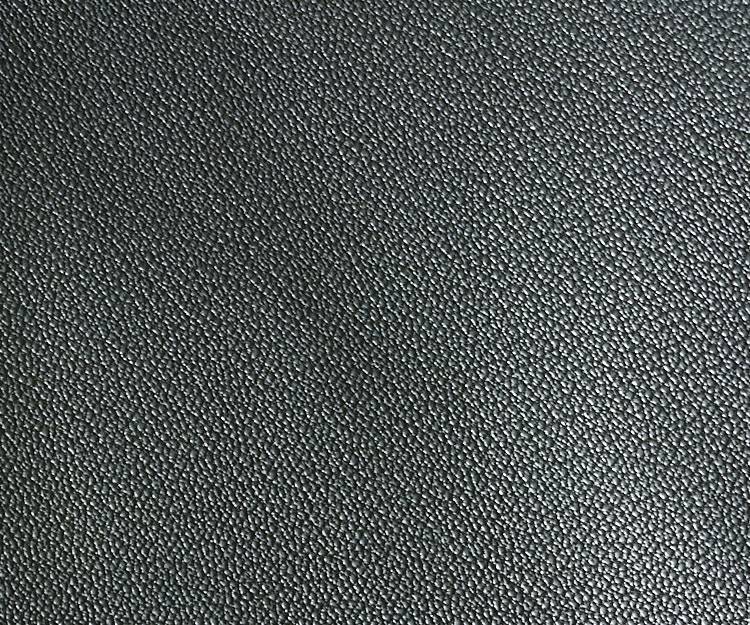
Chèvre leather is one of my favourite sorts of leather because it’s so simple to use, and it looks wonderful. It’s a really distinctive mask which stands out when you see it. Many high-end handbags, in addition to beloved home jobs, use chèvre. In a similar way to horse and cow hides, different sorts of Chèvre leather possess varying levels of quality. We carry two different types of Chèvre, and they come from one of the best tanneries in France. You will find comparable leathers available in the US (labeled simply as goat leather), but they generally are not always quite as nice. When you’ve both hides on your hands, the difference is immediately evident.

Chèvre Hides: Total Look and Feel
Chèvre has a distinctive look that differs from cow leather. The hides are modest, and so is your grain. You can more easily see grain pattern changes such as the spine, the shoulder, and the general grain changing as you go from the body to the legs. By way of instance, as you get closer to the peak of the mask, you can see how the grain pattern gets closer and tighter together.
One panel may have several of those details, making each conceal visually dynamic and distinctive. Some skilled bag-makers and other high-end designers intentionally seek out hides with nuances such as these, but it’s also possible to make a uniform feel throughout the piece.

Chèvre Chagrin
The Chèvre Chagrin we provide on our shop is 100 percent vegetable-tanned, making it effortless to burnish and safe to use for applications in which the leather touches fur or skin (for instance, a watch strap). Utilizing full aniline dye creates a nearly naked conceal; a straightforward blend of tanned leather and colour. Due to that, Chèvre Chagrin is one of our favourite hides to observe age and be even more elegant with time.
The hides have a surface burnish that makes it almost glitter in the light and can evoke much shinier pebbled surface such as a fine-grain stingray. This result is the origin of the leather; it was supposed to evoke stingray.
Chèvre Chagrin is a medium-tempered leather, and its thinness makes it very flexible, but not draping.
Only naturally pristine hides return Chèvre Chagrin because any imperfections in the nude leather will show. Because it’s bare, high-use areas such as the outsides of pockets, buttons, and flaps acquire a burnished glow to them, like how borders are shined after burnishing.

Handling and Care
Take particular care with this leather, both in the handling of it during construction and in its use as a finished product. The complete aniline finish will absorb water and change the color. If you would like to use Chagrin hides for everyday things, consider using a mild protector or wax finish.
Hides are completely dyed through from front to back, so surfaces, edges, and the flesh side will be much the same in color. This effect is referred to as the dye being’struck ‘ The good thing about this is that when edge finishing, you can attain a shiny or a matte appearance, and it’ll have a very similar color to the surface.

Chèvre Crispe
Chèvre Crispe is also a whole vegetable-tanned leather, but with a semi-aniline finish. Semi-aniline finishes are a combination of the aniline dye and pigments to provide the colour more substance. The pigment deepens the face colour of the leather but it’s not added to the trunk. So while the foundation dye color remains’struck through,’ the rear will have a lighter shade. The pigment adds a thin layer on top of the leather that has multiple consequences, including increasing wear resistance and firming up the mood. Additionally, it fills in some of the leather’s grain and evens out small imperfections, giving it a more uniform colour and texture.
A wider quality array of leather hides may be utilised in the creation of Chèvre Crispe since the semi-aniline finish smooths over the surface and corrects small blemishes.
Handling and Care
Chèvre Crispe has fair resistance to dirt and moisture on the surface. It is not naked like Chèvre Chagrin so smaller drops of water will bead on the surface. To better protect your hide, I urge border treatment in addition to applying a mild protector on the back if you’re employing single layer structure.

Chèvre Chagrin vs. Chèvre Crispe
When to Pick Chèvre Chagrin
For top-of-the-line items, it is difficult to beat Chèvre Chagrin. These carefully selected hides are magnificent to look at and improve with age. They’re an exceptional choice for special occasion items or items that you use with caution. Add surface protectants to let you utilize this leather for everyday items which you rough up a little.
One other tip for using Chagrin hides: When picking parts for your job, make the most of the more visible grain and surface attributes. Considering these hides have a natural good look, it is far better to leverage those features. In doing this, you will wind up getting a gorgeous piece which has a dynamic look and feel.

When to Pick Chèvre Crispe
Chèvre Crispe, with its uniform and treated surface, works great for everyday products. It resists moisture and discoloration from exposure to light. Neither Chagrin or Crispe hides are watertight, so make certain to use mink oil or comparable treatment to boost protection against the snow and rain.
The semi-aniline finish enables the hides to appear uniform in texture and colour. You can still see the grain features, and integrate them into your work, but the general look and feel of a Crispe mask will probably be more uniform than a Chagrin hide.
Chèvre Hides: Workability

Chèvre hides are generally pretty thin (0.8-1.5mm), which means that you can use them as liner for a lot of different projects. If you would like a more solid texture, add a filler to make the layers of your job thicker. On a card instance, a single coating works well, while two layers work well for pouches and tiny items. Two layers with or without a filler coating work nicely with handbags, backpacks, and other larger items.
Edge Burnishing
The two Chèvre Chagrin and Crispe can be border burnished. Chèvre Chagrin can also be burnished on the surface either through construction or obviously during routine use to impart a greater shine on the last piece. The colour of Chèvre Crispe is deeper on the top, so edges will be milder unless dyed. Both kinds of leather easily accept edge paint.
Gluing
Our Chèvre doesn’t have a waxy or greasy finish and glues together readily. Be cautious of oversaturating Chèvre Chagrin with glues. If you use too much, it is going to discolor the surface.
Cutting
Chèvre has a little stretch to it, so it is ideal to use sharp knives to cut the leather. Duller knives will extend the leather before cutting and distort the final form. Since Chèvre hides are thin, you can use finer blades such as Xactos or other lean knives without difficulty.
Sewing
Sewing can be quite straight-forward with chèvre leather. If you use an awl, it will readily pass through the hide. This moderate temper leather is pretty forgiving when placing your tension. You still need to be careful no to over-tension your own threads. When they’re too tight, they’ll cut through the leather once you complete the stitch. This broken stitch is referred to as a’dead person.’ The finer grain of Chèvre pairs nicely with 9spi/3mm stitching and 632 linen or #8 MBT thread.
Chèvre Hides: Just the Perfect Size
Chèvre leather is durable, making it great for exteriors and functions well for insides too because it is not overly costly. If you’re developing a mono-color job, this is an exceptional choice since it is possible to use one conceal for the whole project.
Chèvre hides are smaller than cowhides. In examining the different areas of the leather, you will have the ability to observe the differences more readily since all the components are so much closer together. This closeness will yield you a better understanding of how to use each piece for certain components. For instance, you can produce a small crossbody bag using all the various parts of the hide, with each section being perfectly suited to every bag component, like utilizing the stomach for the gusset and the rear for the front panels. This feature won’t only improve your comprehension of conceal selection, but it’s also going to produce a good looking piece.